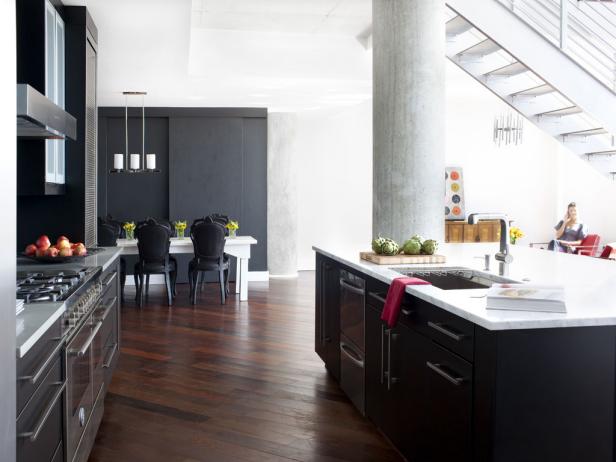
When it comes to kitchen design, white has long reigned supreme. It has been the go-to choice for decades and is bright, clean, and timeless. But black is emerging as a new champion in kitchen design! With its sleek, dramatic appeal and versatility, black is increasingly taking center stage in modern kitchens. Let's look at the pros and cons of swapping white for black, and tips for integrating dark tones into your design.
Why Are Black Kitchens Trending?
Black kitchen interiors are stepping into the spotlight thanks to their luxurious aesthetic, bold personality, and ability to complement various styles. Here are a few reasons why black is trending in contemporary kitchens:
- A Bold Statement: Black is inherently dramatic and sophisticated. Whether you opt for matte black cabinets, glossy countertops, or bold black appliances, this hue instantly commands attention.
- Versatility with Styles: While black kitchens may seem to belong exclusively in industrial lofts or minimalist homes, they're surprisingly versatile. Black pairs beautifully with various styles, including: rustic kitchens, Scandinavian designs, and modern aesthetics.
- A Canvas for Contrast: Black is the perfect backdrop for striking contrasts. Pairing black cabinetry with white countertops or brass hardware creates eye-catching results. It's a chance to experiment with materials, textures, and finishes.
Pros and Cons of Black in Kitchens
Before making the leap into the world of dark-toned kitchens, it's worth considering the advantages and potential challenges.
Advantages
- Timeless Elegance: Black never truly goes out of style, giving kitchens a sophisticated and ageless appeal.
- Hides Dirt and Stains: Unlike white surfaces, black cabinetry, and countertops can mask minor smudges, stains, and daily wear, making them ideal for busy households.
- Versatile Pairing: Black is incredibly adaptable, pairing well with vibrant color pops, metallic hardware, or natural textures like wood and stone.
- Warmth & Depth: Dark tones instantly add depth and warmth to small or large spaces, creating an inviting atmosphere.
Disadvantages
- Lighting Dependency: Black can make a space feel smaller or darker without adequate natural or artificial lighting.
- Maintenance: While black masks dirt, it also make dust and fingerprints more noticeable—particularly on glossy finishes.
- Commitment: Black kitchens can feel bold and daring. If you're prone to changes in taste or prefer a neutral palette, this might not be the right choice for you.
Tips for Incorporating Black into Your Kitchen Design
- Introduce small black elements first if you're unsure about committing to an entirely black kitchen. Black handles, bar stools, dishware, or pendant lights can give you a taste of the trend without overwhelming the space.
- Combining black with textured surfaces like brick walls, marble backsplashes, or wood laminates can create visual interest. Textures soften the starkness of black and add layers to the design.
- Remember that good lighting is key in black kitchens. Natural light, under-cabinet lighting, or pendant fixtures can keep the space feeling bright, open, and inviting, even with dark elements.
Black is bold, stylish, and timeless. But is it the right choice for your kitchen? That depends on a combination of factors—personal taste, kitchen size, lighting, and your willingness to experiment with a trend that's here to stay.
Need help finding the perfect kitchen? We can help you search for your new home in Prescott today!